

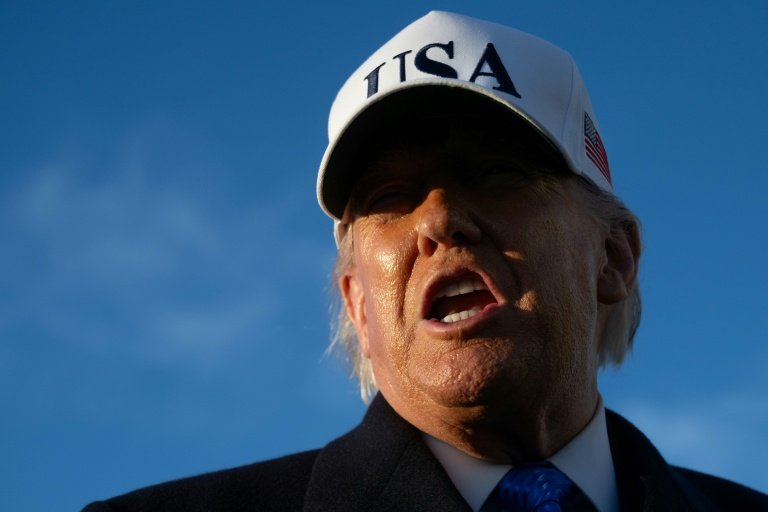
The escalating conflict around the Strait of Hormuz has prompted U.S. President Donald Trump to call on other nations to send naval vessels to help secure the critical waterway, a move that reflects growing concern about global energy supplies and maritime safety.
Trump’s appeal came as attacks on ships and regional hostilities have disrupted traffic through the narrow strait, a chokepoint between Iran and Oman through which roughly a fifth of the world’s oil supply typically passes.
In posts and public statements, the U.S. president urged countries heavily dependent on Gulf energy shipments—including China, France, Japan, South Korea and the United Kingdom—to deploy warships or other naval assets to ensure safe passage for commercial vessels.
“Many countries, especially those who are affected by Iran’s attempted closure of the Hormuz Strait, will be sending warships… to keep the Strait open and safe,” Trump wrote on social media, emphasizing that maintaining free energy flows was a global responsibility rather than solely a U.S. obligation.
The Strait of Hormuz is widely considered one of the most strategically important waterways in the world. The narrow passage connects the Persian Gulf to the Gulf of Oman and the Arabian Sea, acting as the primary export route for oil produced in the Middle East.
According to energy analysts, millions of barrels of crude oil pass through the strait each day, accounting for a significant share of global maritime energy trade.
Any disruption can send shockwaves through international markets. When tensions in the region escalate, oil prices often surge due to fears that shipments could be delayed or halted altogether.
Recent clashes involving Iranian forces and attacks on vessels in the region have already caused shipping traffic to slow dramatically. In some cases, oil producers in the Middle East have reportedly struggled to export crude due to storage limits and security concerns.
For global economies that rely heavily on imported energy—especially in Asia and Europe—the stability of this route is vital.
The latest crisis around Hormuz comes amid broader geopolitical tensions involving Iran, the United States, and regional allies.
Iran’s Islamic Revolutionary Guard Corps has claimed it maintains “complete control” over the strait, warning that foreign military deployments could trigger further confrontation.
Meanwhile, the U.S. administration has warned Tehran against interfering with commercial shipping. Trump said Washington could deploy the U.S. Navy to escort tankers if necessary and has also discussed providing political risk insurance for ships traveling through the area.
Despite these statements, U.S. naval officials have acknowledged that escorting commercial ships through the waterway remains highly risky due to potential attacks using drones, mines or missiles.
This uncertainty has led Washington to push for a broader multinational effort rather than relying solely on American forces.
Trump’s request for international support has so far produced mixed reactions from allies.
Some governments have expressed willingness to discuss maritime security cooperation but have stopped short of committing military assets.
Japan, for example, said the threshold for deploying warships to the strait remains “extremely high,” reflecting constitutional limits and domestic caution about overseas military operations.
Similarly, South Korea has indicated it will coordinate closely with Washington before making any decision about sending naval forces.
The United Kingdom has also been exploring possible contributions, including mine-hunting drones and other defensive tools that could help clear shipping routes if mines are detected.
However, no country has yet formally committed to deploying warships as part of a U.S.-led mission.
While the U.S. push for naval cooperation focuses on security, some governments are pursuing diplomatic channels to reduce tensions.
India’s foreign minister recently highlighted talks with Iran aimed at ensuring safe passage for Indian vessels through the strait, emphasizing that dialogue can sometimes produce practical solutions faster than military action.
These diplomatic initiatives reflect concerns that a large international naval presence could escalate the situation if miscalculations occur.
Experts say maritime security operations in such a narrow and heavily trafficked waterway carry significant risks.
Ships traveling through the strait must navigate tight shipping lanes only a few miles wide, leaving little room for maneuver in the event of military confrontation.
Energy analysts warn that prolonged instability in the Strait of Hormuz could have far-reaching consequences.
If the waterway remains partially closed or dangerous for shipping, global oil supplies could tighten rapidly, driving up fuel costs for consumers and businesses worldwide.
Earlier disruptions in the region have already caused oil prices to jump sharply, with some forecasts suggesting prices could exceed $100 per barrel if the crisis continues.
The International Energy Agency has even considered releasing emergency reserves to help stabilize markets if shipments remain blocked.
Because of these economic risks, pressure is growing on governments to find a way to keep shipping lanes open.
Trump’s call for other countries to send ships highlights a broader debate about burden-sharing in global security.
For decades, the U.S. Navy has played the leading role in protecting international sea lanes. But Washington increasingly argues that countries benefiting from global trade should contribute more to safeguarding it.
Asian economies such as Japan, South Korea and China import significant volumes of Middle Eastern oil that transit the strait each day.
From Washington’s perspective, that dependence provides a strong incentive for these nations to participate in security efforts.
Whether such cooperation will materialize remains uncertain.
Many governments remain wary of being drawn into a direct confrontation with Iran, particularly as regional tensions remain volatile.
The coming weeks may determine whether Trump’s call for a multinational naval effort gains traction.
If additional countries deploy ships to the Gulf, it could lead to the formation of a broader maritime coalition designed to protect shipping and deter attacks.
But if allies remain reluctant, the United States may face increasing pressure to secure the route largely on its own.
Either way, the crisis surrounding the Strait of Hormuz underscores how a narrow stretch of water can hold enormous influence over the global economy.
As long as tensions persist in the region, the safety of this crucial energy corridor will remain a central concern for governments, markets and shipping companies around the world.